The ChatGPT Workflow Freelancers Are Using to Finish Client Projects 3x Faster
You're Probably Burning 20 Hours a Week on Work That AI Can Do in 20 Minutes
Let me ask you something uncomfortable.
How many hours did you spend last week writing emails, drafting proposals, doing research, reformatting documents, or explaining the same thing to a client — again?
If you're an honest freelancer, that number is embarrassing.
Not because you're lazy. Because nobody told you there's a better way.
There's a specific kind of freelancer emerging right now — quietly, without announcing themselves — who is delivering client work faster, charging more, taking on more projects simultaneously, and spending less time at their desk.
They're not geniuses. They don't have teams. They have systems.
And those systems run on AI.
Here's What's Actually Happening (Most People Have No Idea)
Before we get into the workflow, I want to paint a picture.
Six months ago, a UX consultant I know was working 55-hour weeks, barely hitting $6k/month. She was the bottleneck in her own business — every client required her full attention, full time.
She stopped treating AI like a novelty and started treating it like an employee.
Today, she takes on twice as many clients, delivers work in half the time, and crossed $14k last month — working 35-hour weeks.
What changed? Not her skills. Her workflow architecture.
Here's the part I want you to hold onto: AI leverage compounds early. The people building these workflows now are creating unfair advantages that will only widen over time.
I'll show you the exact workflow later. But first, you need to understand why most people fail with AI.
Why "Just Use ChatGPT" Doesn't Work
Most people open ChatGPT, type a vague question, get a generic answer, and decide AI isn't useful.
That's like handing someone a scalpel and being surprised they can't perform surgery.
The difference between AI beginners and AI operators isn't intelligence. It's prompt architecture — knowing how to structure your input so the output is immediately usable.
The second failure point is tool chaos. People hop between ChatGPT, Claude, Gemini, Perplexity, Notion AI, and ten other tools without a coherent system. They're exhausted and no more productive.
The third is no monetization bridge. They automate tasks but never figure out how to translate that saved time into income.
The people winning with AI right now have solved all three.
The 3-Layer Freelance AI Workflow
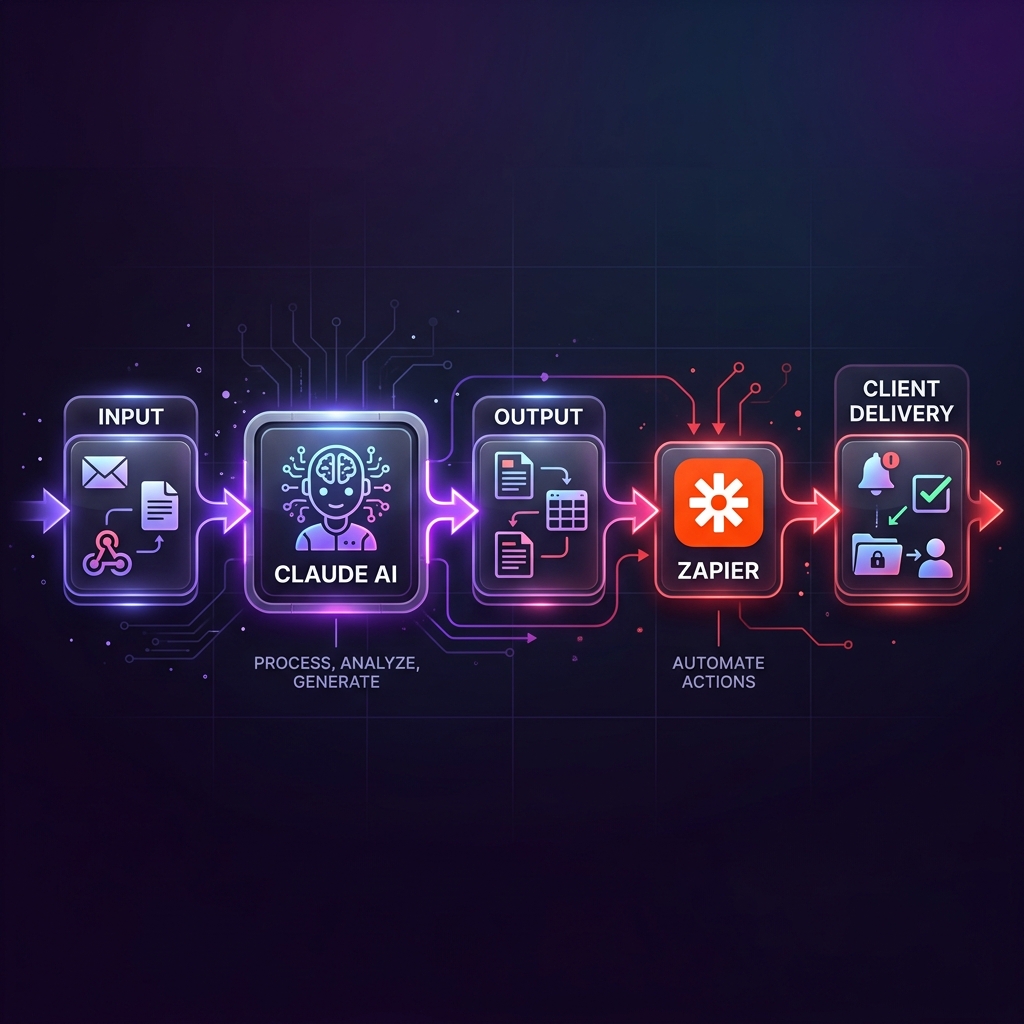
Here's the actual system. It's not complicated — it's layered.
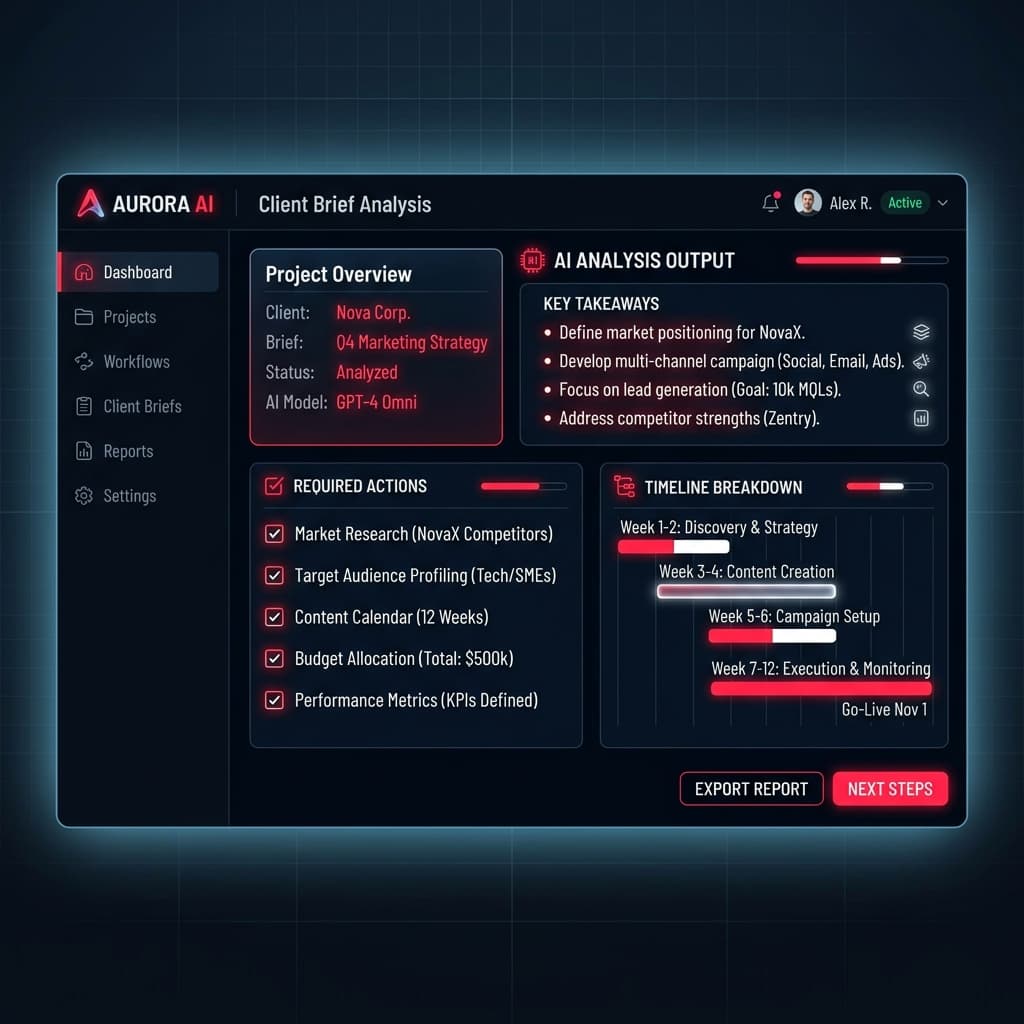
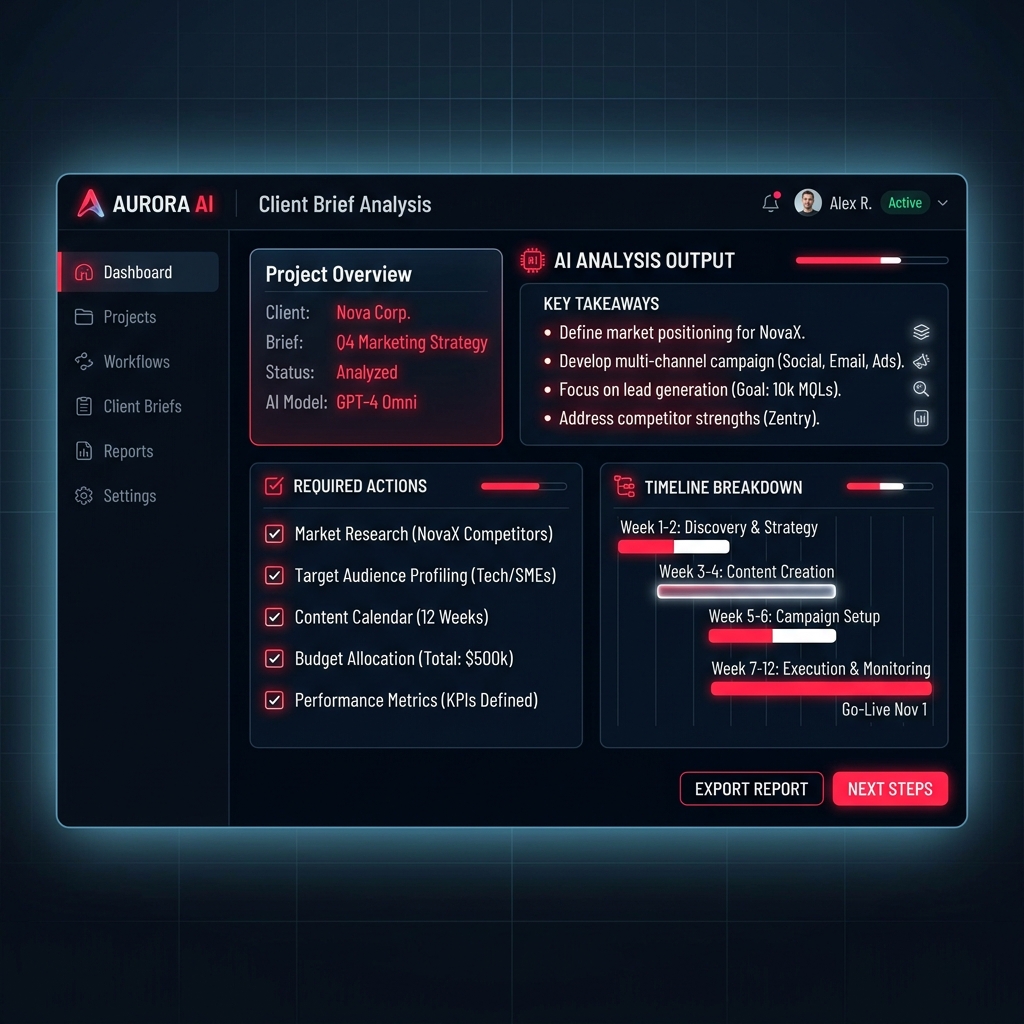
Layer 1: The Client Brief Decoding Protocol
When a new project lands, most freelancers spend hours in discovery trying to understand what the client actually wants.
Prompt Template:
You are an expert [your niche] consultant. A client has sent me this brief: [paste brief].

Identify:
1. The 3 core deliverables they're asking for (explicitly and implicitly)
2. The 3 biggest risks or unclear areas I should clarify
3. The technical requirements hidden in the request
4. A realistic timeline breakdown
5. 5 smart clarifying questions I should ask before starting

Output as a structured report.
What used to take a 2-hour strategy session now takes 4 minutes. You show up to the kickoff call looking like a seasoned pro who already understood the project before they explained it.
Tools: ChatGPT-4o or Claude 3.5 Sonnet
Layer 2: The Deliverable Assembly Line
This is where the real speed gains happen.
Instead of creating from scratch, you build templates + AI completion.
Step 1 — Research sprint (15 mins instead of 3 hours)
Research [topic] and give me:
- 10 data points with source types (I'll verify them)
- The top 5 counter-intuitive angles on this topic
- The 3 strongest emotional hooks for [target audience]
- Key terminology used by experts in this field
Step 2 — Structure first, write second
Using this research, create a detailed outline for a [deliverable type].
Client goals: [goals]. Audience: [audience]. Tone: [tone].
Step 3 — Client-voice calibration
Rewrite this in the voice of a [client description] who values [values] and speaks to [audience].
Reference phrases they use: [paste client examples].
Total time per deliverable: 40% of what it used to take.
Layer 3: The Relationship Automation Stack
The Feedback Translator:
A client gave me this feedback: [paste feedback].
Identify:
1. What they like (never change this)
2. What they actually want changed (vs what they said)
3. The fastest revision path that addresses their real concern
4. One thing I can do to make them feel heard without redoing everything
![Image idea: split screen showing a raw client email and an AI-generated structured response breakdown]
The Monetization Bridge
Here's what separates hobbyists from operators: turning saved time into more income.
- Capacity expansion: If you used to deliver 4 projects/month, you now deliver 8. Same rates, double income.
- Premium positioning: You now deliver faster and with higher polish. Raise rates.
- Productized packages: Package your AI workflow as a fixed-price service. "24-hour content audit + rewrite" at $497.
- Teaching the system: If you've built a workflow that works, other freelancers will pay to learn it.
The Hidden Advantage Nobody Talks About
When you're deep in a workflow like this, something strange starts happening.
Your intuition about what AI can and can't do sharpens fast. You develop a feel for where to apply it, where to stay human, how to edit AI outputs to sound like you.
This skill — AI operator judgment — is becoming the most valuable professional skill of this decade.
It can't be copied quickly. It's built through practice. Every week you wait is a week someone else gets ahead.
Most people spending weeks bouncing between random AI tools never develop this intuition. Structured learning matters here — which is why platforms like AIMasterclass are becoming essential for freelancers trying to skip the 6-month trial-and-error phase and go straight to building real workflows.
The Scaling Play Nobody Sees Coming
Once you've mastered your own freelance AI workflow, the next level is templatizing it and selling it.
Some are packaging these as:
- Notion templates with embedded prompts
- Video mini-courses on Gumroad
- Consulting calls for other freelancers
- Done-with-you bootcamps via cohort models
Your workflow is a product. Most people haven't realized that yet.
The Window Is Real — And It's Closing
The freelancers who build these workflows now:
- Won't be competing on price
- Won't be replaceable by cheaper competitors
- Will be charging for their system, not their hours
The ones who wait will find themselves in a market where everyone has the tools but nobody has the edge.
The edge is how you use them.
That's the only thing that matters now.
Start building.
If you want structured, workflow-first AI education — not random tool tutorials — AIMasterclass is built for exactly that: practical systems, not theory.